
OUR VISION
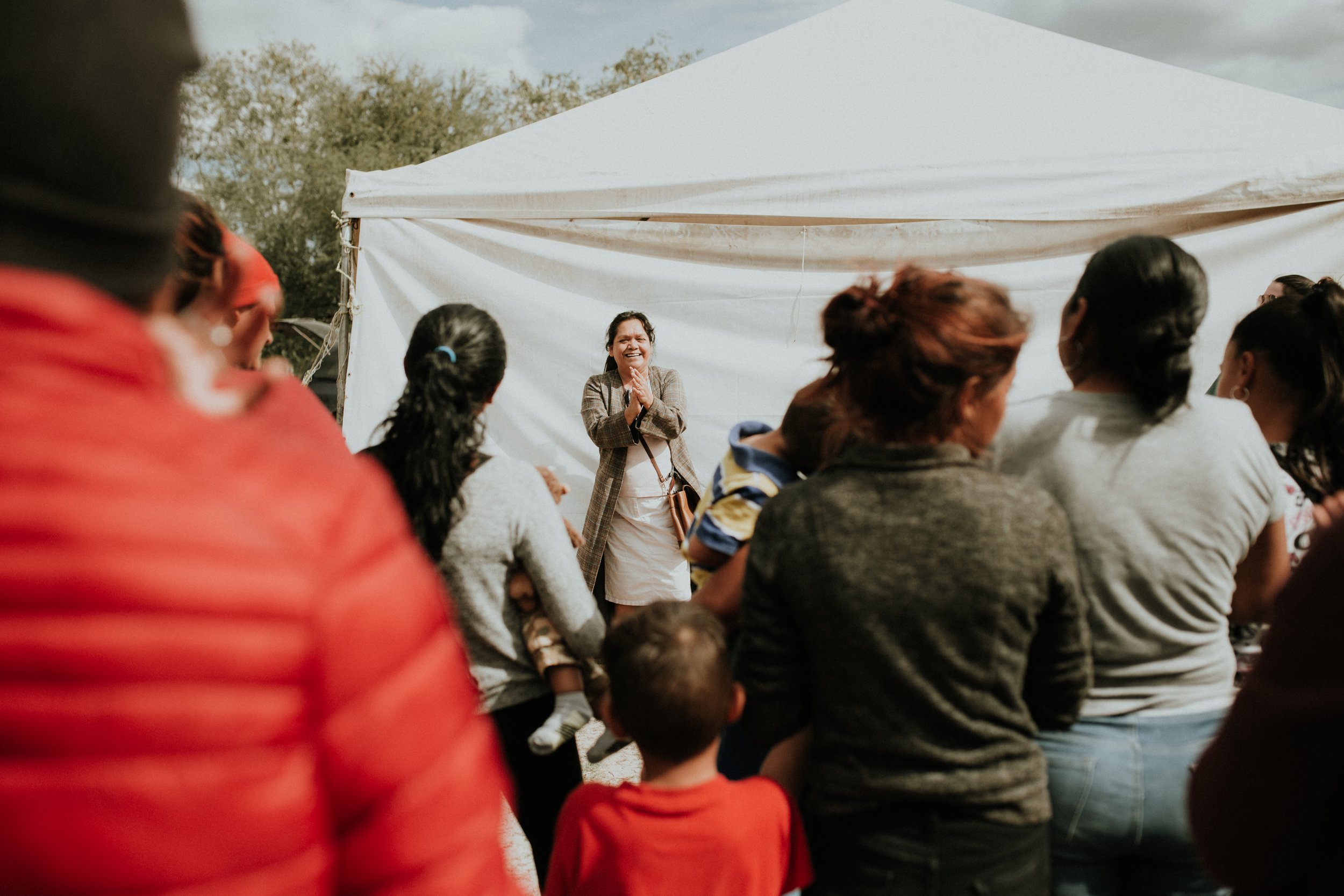
We envision people of faith being shaped through relationships with immigrant communities, immersive learning rooted in history and the theology of place, awakened and formed by Scripture, lived experiences, and sent out to love their neighbors — at the border and far beyond it.
OUR MISSION
We exist to equip, educate and mobilize people of faith through biblical resources and service-learning experiences along the U.S. and Mexico border.
A WORD FROM OUR FOUNDER
“Border Perspective helps transform the immigration conversation and influence people of faith to make informed decisions about how to handle the complex political environment surrounding the border and the perception of immigrants living among us.”

Jesus
Everything we do points to Jesus.
We create immersive experiences to help people encounter His love, restore relationships, and love others as He taught us. Rooted in the greatest commandment; to love God and love people, we seek to reflect Christ’s unconditional care in all we do.

Multi-Denominational
We serve the whole body of Christ.
Centered on Jesus, we partner with a wide range of Christian denominations. We operate as a multi-denominational organization and welcome participants from every Christian tradition.
While on a trip, participants may encounter beliefs and practices different from their own. We see these moments as opportunities for reflection, meaningful conversation, and deeper faith formation.
OUR ORIGIN STORY

OUR HISTORY
Border Perspective began in 2017 with a photographic and listening journey along the U.S.–Mexico border. Brothers Yonathan and Jordan Moya, who were raised in the Rio Grande Valley, traveled nearly 2,000 miles through border communities to document stories, listen to local residents, and better understand the region they still called home.
Although they had grown up along the border, the journey revealed how much there was still to learn. Rather than arriving with predetermined answers or a political agenda, they approached each community with curiosity, humility, and a desire to listen. They met with immigrant families, pastors, nonprofit leaders, law-enforcement professionals, business owners, advocates, and longtime border residents whose experiences reflected the complexity and humanity of the region.
What began as a storytelling project soon became a broader ministry. Churches, universities, community organizations, and individuals began asking how they could experience the border for themselves and engage immigration from a perspective shaped by Scripture, history, relationships, and proximity.
In response, Border Perspective developed educational resources, exhibits, facilitated conversations, and immersive service-learning experiences that bring people of faith into meaningful relationships with border and immigrant communities. Participants are invited not simply to observe the border, but to listen to those who live there, serve alongside local leaders, examine their assumptions, and consider how their faith should shape their response to immigrants and neighbors.
Over time, Border Perspective has expanded its work to include border immersion experiences, leadership formation, church training, the bi-annual Border Summit, the Peacemakers Podcast, and partnerships with churches and organizations throughout the United States. While the ministry has grown, its original posture has remained the same: listen first, remain humble, honor the dignity of every person, and follow the way of Jesus.
Today, Border Perspective equips, educates, and mobilizes people of faith through biblical resources and service-learning experiences along the U.S.–Mexico border. We seek to transform the immigration conversation by centering the voices of border communities and helping people make informed, faithful, and compassionate decisions within a complex political and cultural environment.
Our history is rooted in the border, but our vision extends far beyond it. We believe that when people encounter one another through relationships, Scripture, history, and lived experience, they can return to their own communities better prepared to love God, love their neighbors, and practice the way of Jesus.